
Fast, Effective UX Wins with Heuristic Evaluations
- Jen Bergmueller & Rachael Worley
- 7 min read
Enhancing Customer Experience at Ally: The Role of Heuristic Evaluations
While the tools and technologies in UX have evolved rapidly, some of the simplest methods remain the most effective. Heuristic evaluations, first popularized in the 1990s, may feel old-school compared to advanced analytics or AI-driven design. Yet across industries—from banking to e-commerce—they continue to reveal usability issues quickly and cost-effectively. At Ally, we’ve found that revisiting this classic approach helps us keep experiences intuitive, human-centered, and aligned with customer needs.
What is a heuristic evaluation?
Think of heuristics as a rule of thumb. Jakob Neilsen and Rolf Molich created a set of 10 usability principles that are still the gold standard for today. While heuristics are a valuable tool in identifying issues early, fostering cross-team collaboration, and reinforcing human centered design, they are not a replacement for moderated or unmoderated usability testing with our target audience.
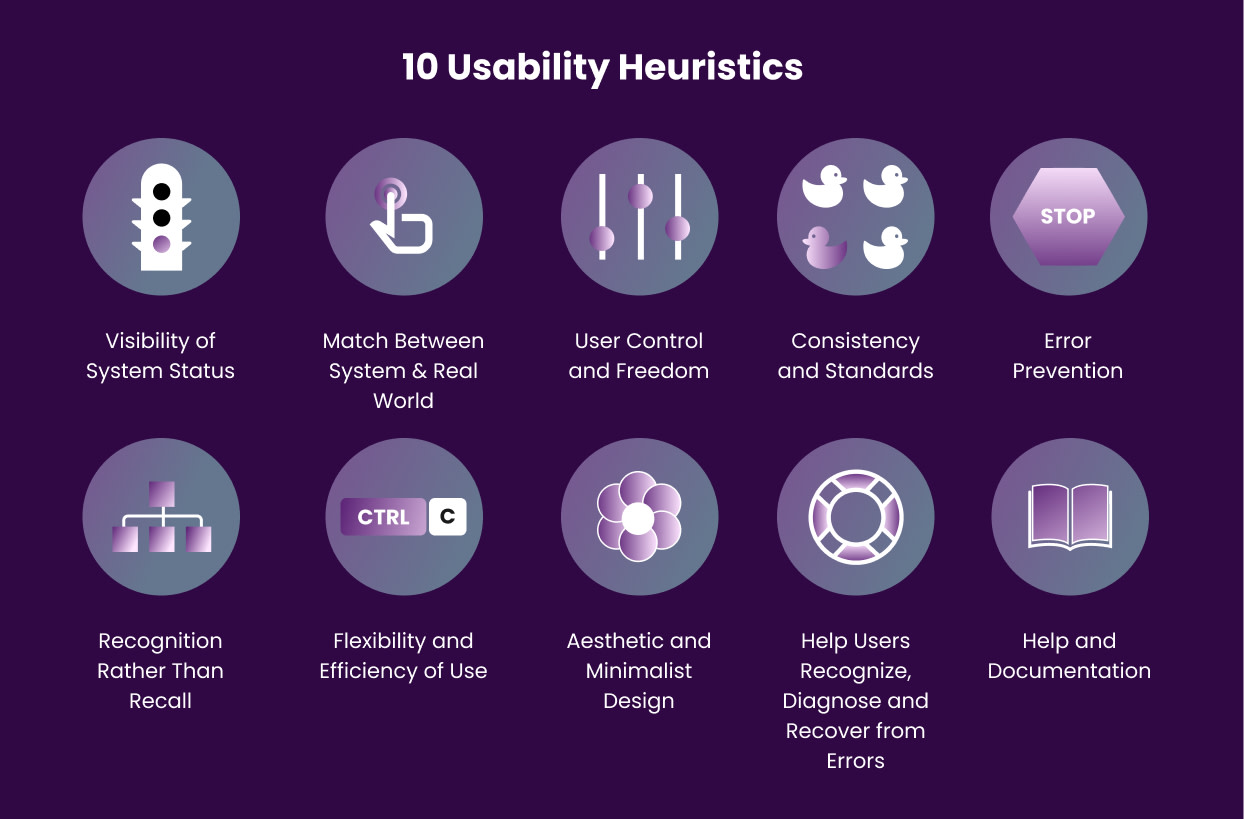
Planning your heuristic evaluation.
When gearing up for a heuristic evaluation, we gather a team of at least 3-5 members from various roles such as research, design, content, product owners and development. We start by focusing on a common task or two to avoid feeling overwhelmed. The team spends an hour or two individually evaluating the tasks, then reconvenes to discuss findings, identify common themes, and prioritize issues. In our process, it is common to flag something as “breaking” multiple heuristics or even decide to “break” a heuristic for a valid reason. For instance, most login error messages don’t specify whether the username or password is incorrect, technically violating heuristic #9 (“Recognize, Diagnose, and Recover from Errors”). However, specifying which is incorrect might provide hackers with information that could help them plan their next attack.
What we did: identify opportunities to improve money movement.
A recent example of heuristics in action was to look at our money transfer experience. The UX team worked with a UX Researcher to review the current experience and identified several opportunities to enhance this experience for our customers. They focused on making it more intuitive and seamless and thought about how a customer might approach the information in different scenarios. For example, do customers prioritize information differently if they are in a rush to send money to cover an emergency expense vs setting up a recurring transfer of $20 to their savings account.
Once the UX team reviewed their findings they collaborated with the development team to assess the severity and feasibility of each identified issue by mapping the stickie notes on a quadrant measuring effort to fix (low to high) against user impact (low to high). Issues were flagged as high or low impact based on if a customer could still successfully complete their task. While our evaluation didn’t identify any “showstoppers” we did identify some places where the content could provide more clarity and be a better match between the system and real world (Heuristic #2). Our tech partners provided valuable insights to ensure the level of effort aligns with the technical realities they face. By understanding the developer’s perspective, we can prioritize changes that truly enhance the user experience without adding unnecessary complexity.
By completing a heuristic evaluation prior to formal usability testing, it allows our UX researchers to concentrate on the more significant questions. When the team addresses lower-impact items beforehand, research can delve deeper into the core issues that affect our customers' experiences. This focus not only streamlines the research process but also ensures that our solutions are both effective and meaningful.
Looking Ahead
As we continue to refine our approach, heuristic evaluations will remain a vital part of our strategy to deliver best-in-class human-centered design. By empowering our designers and content strategists to reflect on their work, we are cultivating a culture of continuous improvement. Collaboration and customer insight are at the heart of how Ally designs. Every interaction reflects our commitment to clarity, consistency, and doing it right by advancing the digital experience that empowers our customers and the teams designing them.
At Ally, we believe that great design is not just about aesthetics—it's about creating experiences that resonate with our users. Through tools like heuristic evaluations, we are paving the way for a future where more interactions can be intuitive, efficient, and enjoyable.
Interested in joining Ally's team of talented technologists to make a difference for our customers and communities? Check outAlly Careersto learn more.