Driving on the road with your check engine light on just to avoid the repair costs? We’ve all been there! Unknown expenses can be stressful, but protections from a manufacturer's warranty or vehicle service contract (VSC) can help. If you’re unsure which option is best for you, read on for tips.
Key differences between a manufacturer’s warranty and vehicle service contract
Both a manufacturer’s warranty and a VSC can reduce out-of-pocket expenses for certain vehicle repairs and fixes. Manufacturer’s warranties typically come with a new car purchase and are provided by the automaker itself, offering coverage for a limited amount of time. A vehicle service contract, on the other hand, can extend beyond your original warranty’s coverage period. It may be offered by a third party.
Each option offers slightly different coverage:
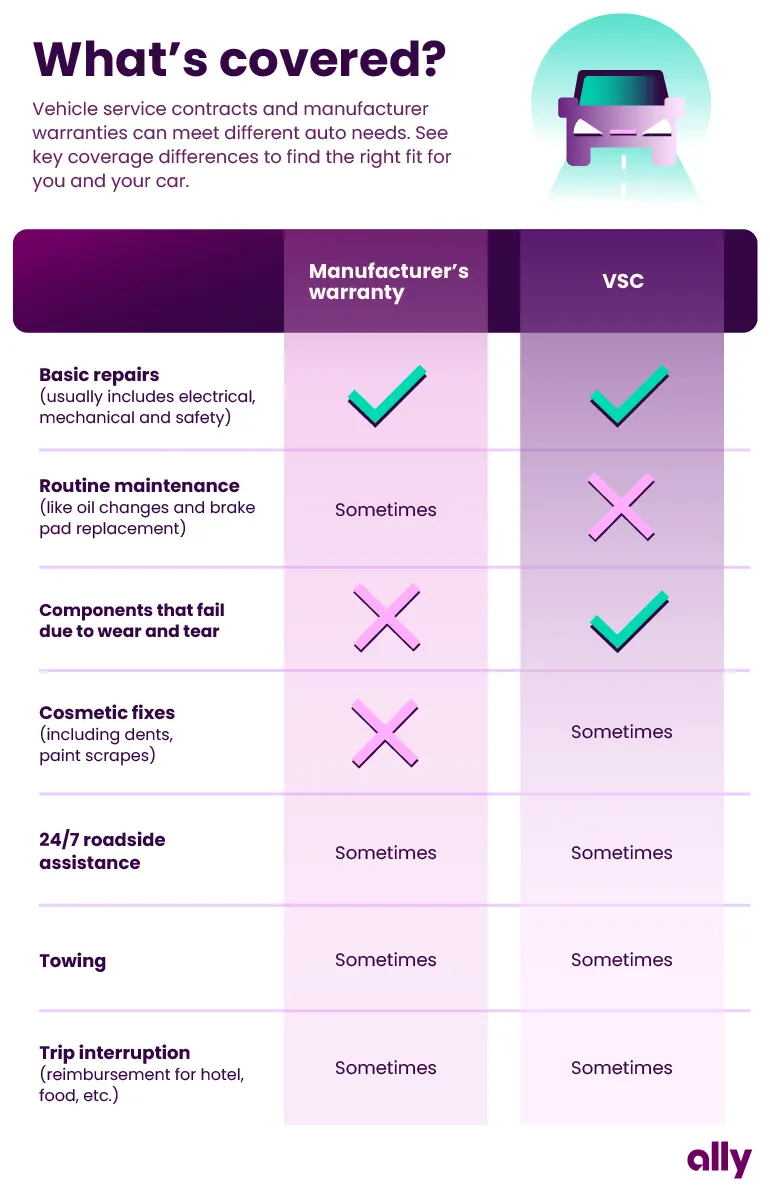
Keep in mind: There are a variety of car insurance options, but neither a warranty nor VSC is meant to replace your primary car insurance.
Read more: Keep all of your auto expenses on track with spending buckets
What is a manufacturer’s warranty?
When you buy a new car, a manufacturer’s warranty comes with it. How does a car warranty work? For a limited period (typically three years or 36,000 miles), some routine maintenance and repairs due to manufacturing defects will be covered. After the period is up, your warranty expires.
Because these warranties are limited, they can't be reinstated and are only provided on new cars. Even though it's new to you, a used car that's purchased outside of the designated time or mileage will typically not be eligible for a manufacturer's warranty, a key factor to consider when evaluating new versus used car options.
Advantages of a manufacturer’s warranty
Warranty pros include:
Guaranteed original parts for repairs and technicians trained on your vehicle
Included at no cost with the purchase of a new car (or sometimes used car within time and mileage limits, if applicable)
Includes basic repairs for mechanical, electrical and safety issues
Disadvantages of a manufacturer’s warranty
Consider these drawbacks:
Does not include repairs due to wear and tear
Cosmetic fixes like dents and paint scrapes are not covered
Repairs must be done at a dealership
What is a vehicle service contract?
VSCs, sometimes referred to as extended warranties, are more flexible than a manufacturer’s warranty. Typically, you can choose how long you'd like to protect your vehicle with a VSC. You can purchase one when you first buy your car, or for a car you already own, either from the original manufacturer or a third-party provider.
A VSC is an additional expense, but the cost of coverage could be significantly less than the price of repairs. Set money aside in an Ally Bank Spending Account spending bucket and be prepared for recurring VSC costs.
Your coverage and perks will depend on the VSC you choose. Many will cover electronic, engine and transmission repairs, including parts and labor. Some VSCs may also include 24/7 roadside assistance, towing, trip interruption protection or rental car reimbursement.
Advantages of a vehicle service contract
You might consider a VSC because:
They might have flexible coverage and payment options
Repairs can be done at the dealership or by any certified technician
Coverage usually goes beyond manufacturer's warranty expiration
They frequently cover repairs due to wear and tear (unlike a manufacturer’s warranty)
It can be transferred to a new owner
Disadvantages of a vehicle service contract
Some downsides of VSCs include:
Not all repairs are covered
Charged in addition to cost of vehicle
Coverage may go unused
It may not include routine maintenance like oil changes and brake pad replacements
Not all VSCs guarantee that original manufacturer parts will be used
Choosing the right mechanical coverage for your vehicle
You should feel empowered to decide what works best for you when it comes to protecting your vehicle. With the Ally Premier Protection suite, you can choose between multiple options and match your coverage to your driving habits. Whether you have a manufacturer’s warranty, a vehicle service contract or both are working together, take the time to understand what’s protected and hit the road with peace of mind.